

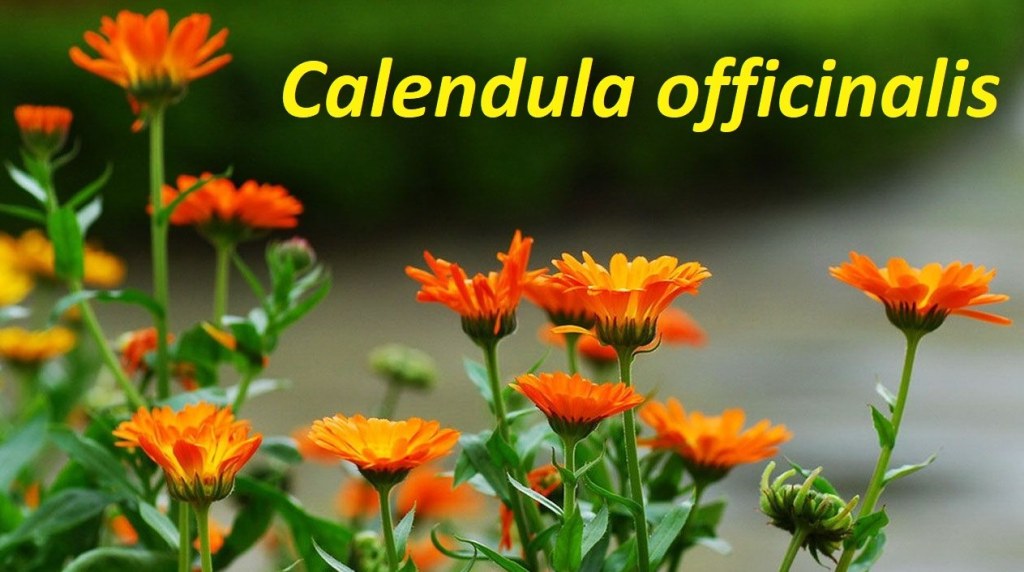
La Maravilla o Calendula, una de mis plantas preferidas y que más uso en mi día a día.
Los principales compuestos de las flores, hojas y tallos son la luteína y el beta-caroteno (1).
La Caléndula ha demostrado tener propiedades anti-inflamatorias (2), mejorar la cicatrización de heridas (4) (3), antibacteriano, antiparasitario (5), y también tener efectos citotóxicos y antitumorales (6) (7) tanto en Vitro e in vivo. Además, los estudios realizados en ratones indican las propiedades como fortalecedor hepático y renal (8), y cardioprotectora (9).
Los triterpenoides presentes en esta planta suprimieron la fusión celular, lo que puede inhibir eventos tempranos en el ciclo de replicación del VIH (10).
Una formulación a base de hierbas que contiene caléndula se encontró eficaz en la reducción de dolor de oído en niños con otitis (11) (12). La aplicación tópica de una crema de caléndula se mostró segura y eficaz en los lactantes, así como para el tratamiento en niños con dermatitis producida por los pañales (13).
El uso tópico se usa para profilaxis de dermatitis aguda durante la radioterapia (14) (15); También fue interesante como enjuague bucal contra la estomatitis “inflamación mucosa bucal” producida por la quimioterapia(16).
Se piensa que el efecto fotoprotector de las formulaciones de gel tópico que contienen caléndula está asociado con una mejora en la síntesis de colágeno en el tejido conectivo subepidérmico (17).
Su uso oral debe evitarse durante el embarazo y la lactancia porque faltan datos de seguridad.
Estudios científicos:
1. Bako E, Deli J, Toth G. HPLC study on the carotenoid composition of Calendula products. J Biochem Biophys Methods. Oct-Nov 2002;53(1-3):241-250.
2. Akihisa T, Yasukawa K, Oinuma H, et al. Triterpene alcohols from the flowers of compositae and their anti-inflammatory effects. Phytochemistry. Dec 1996;43(6):1255-1260.
3. Chandran PK, Kuttan R. Effect of Calendula officinalis Flower Extract on Acute Phase Proteins, Antioxidant Defense Mechanism and Granuloma Formation During Thermal Burns. J Clin Biochem Nutr. Sep 2008;43(2):58-64.
4. Barnes J, Anderson LA, Phillipson JD. Herbal Medicines. London: Pharmaceutical Press; 2002
5. Szakiel A, Ruszkowski D, Grudniak A, et al. Antibacterial and Antiparasitic Activity of Oleanolic Acid and its Glycosides isolated from Marigold (Calendula officinalis).Planta Med. Nov 2008;74(14):1709-1715.
6. Boucaud-Maitre Y, Algernon O, Raynaud J. Cytotoxic and antitumoral activity of Calendula officinalis extracts. Pharmazie. Mar 1988;43(3):220-221.
7. Ukiya M, Akihisa T, Yasukawa K, et al. Anti-inflammatory, anti-tumor-promoting, and cytotoxic activities of constituents of marigold (Calendula officinalis) flowers. J Nat Prod. Dec 2006;69(12):1692-1696.
8. Preethi KC, Kuttan R. Hepato and reno protective action of Calendula officinalis L. flower extract.Indian J Exp Biol. 2009 Mar;47(3):163-8.
9. Ray D, Mukherjee S, Falchi M, Bertelli A, Das DK. Amelioration of myocardial ischemic reperfusion injury with Calendula officinalis. Curr Pharm Biotechnol. 2010 Dec;11(8):849-54.
10. Kalvatchev Z, Walder R, Garzaro D. Anti-HIV activity of extracts from Calendula officinalis flowers. Biomed Pharmacother. 1997;51(4):176-180.
11. Sarrell EM, Cohen HA, Kahan E. Naturopathic treatment for ear pain in children. Pediatrics. May 2003;111(5 Pt 1):e574-579.
12. Sarrell EM, Mandelberg A, Cohen HA.Efficacy of naturopathic extracts in the management of ear pain associated with acute otitis media. Arch Pediatr Adolesc Med. Jul 2001;155(7):796-799.
13. Panahi Y, Sharif MR, Sharif A, et al. A randomized comparative trial on the therapeutic efficacy of topical aloe vera and Calendula officinalis on diaper dermatitis in children. Scientific World Journal.2012;2012:810234.
14. Pommier P, Gomez F, Sunyach MP, et al. Phase III randomized trial of Calendula officinalis compared with trolamine for the prevention of acute dermatitis during irradiation for breast cancer. J Clin Oncol. Apr 15 2004;22(8):1447-1453.
15. Kassab S, Cummings M, Berkovitz S, et al. Homeopathic medicines for adverse effects of cancer treatments. Cochrane Database Syst Rev. 2009 Apr 15;(2):CD004845. Review.
16. Oberbaum M, Yaniv I, Ben-Gal Y, et al. A randomized, controlled clinical trial of the homeopathic medication TRAUMEEL S in the treatment of chemotherapy-induced stomatitis in children undergoing stem cell transplantation. Cancer. 2001 Aug 1;92(3):684-90.
17. Fonseca YM, Catini CD, Vicentini FT, et al. Efficacy of marigold extract-loaded formulations against UV-induced oxidative stress. J Pharm Sci. 2011 Jun;100(6):2182-93.


Ok
Me gustaMe gusta